In today's customer-driven market, being a great B2C representative goes far beyond answering questions or completing sales. A successful representative builds trust, creates meaningful customer experiences, and contributes directly to customer loyalty and brand reputation.
Customers expect fast support, personalized interactions, and genuine human connection. Businesses that succeed in B2C environments are those that understand how to combine efficiency, empathy, communication, and problem-solving.
Help customers help themselves
Modern customers value convenience and autonomy. Providing self-service options such as:
- FAQs,
- knowledge bases,
- tutorials,
- troubleshooting guides,
- and automated assistance
allows customers to resolve simple issues quickly and independently.
However, self-service should complement, not replace, human support. Customers should always feel that assistance is accessible whenever they need it.
Be ready with fast and effective solutions
Customers appreciate quick responses and efficient resolutions.
A strong B2C representative understands how to adapt solutions based on customer needs while maintaining professionalism and empathy. Fast support helps:
- reduce frustration,
- improve customer satisfaction,
- strengthen trust,
- and increase loyalty.
Efficiency is important, but quality and human interaction remain essential.
Never ignore what the customer is saying
Active listening is one of the most valuable customer service skills.
Customers often provide important information about:
- their concerns,
- expectations,
- frustrations,
- and preferences.
Paying close attention allows representatives to provide more personalized and accurate solutions while making customers feel heard and respected.
Listening carefully also helps prevent misunderstandings and improves the overall customer experience.
Encourage customers to talk
The more information a representative gathers, the better the support experience becomes.
Asking thoughtful and relevant questions helps:
- identify the root cause of issues,
- better understand customer motivations,
- and provide solutions tailored to their needs.
Meaningful conversations create stronger customer relationships and improve customer satisfaction.
Find ways to surprise and delight customers
Outstanding customer experiences are often created through small but meaningful actions.
Even though B2C relationships may not always be long-term or deeply personal, customers still appreciate feeling valued and recognized.
Simple actions can make a significant difference, such as:
- proactive follow-ups,
- personalized communication,
- quick problem resolution,
- or simply respecting the customer's time.
Businesses should also make communication easy by offering the channels customers prefer most, including:
- phone support,
- live chat,
- email,
- and social media messaging.
Important things to remember in sales
Build genuine rapport
Without trust and authentic connection, the sales process becomes transactional and less effective.
Building rapport helps representatives:
- understand customer motivations,
- identify pain points,
- and create more natural conversations.
Simple human interactions and small talk can strengthen relationships significantly. Customers are more likely to engage with representatives who appear approachable, confident, and trustworthy.
Improve communication and presentation skills
People skills play a critical role in sales success.
Representatives should continuously evaluate:
- their tone of voice,
- confidence level,
- communication style,
- and overall attitude.
First impressions strongly influence how customers perceive both the representative and the company.
Strong communication skills, professionalism, and active listening contribute to a more engaging and successful customer experience.
Listen, don't just hear
A successful sales process should always be based on two-way communication.
Many sales professionals focus too heavily on speaking instead of truly listening to customer needs. However, customer feedback, whether positive or negative, is one of the most valuable sources of insight available.
Actively listening helps businesses:
- improve services,
- understand customer expectations,
- and adapt solutions more effectively.
Focus on solving problems, not just closing sales
Modern sales professionals are problem solvers first.
Customers are not simply purchasing products or services; they are looking for solutions that improve their lives or solve specific challenges.
For example, a coffee company is not just selling coffee: it is helping customers stay energized, focused, and productive throughout the day.
When representatives focus on creating value instead of pushing sales, conversations become more authentic, confident, and customer-centered.
Understanding the customer lifecycle
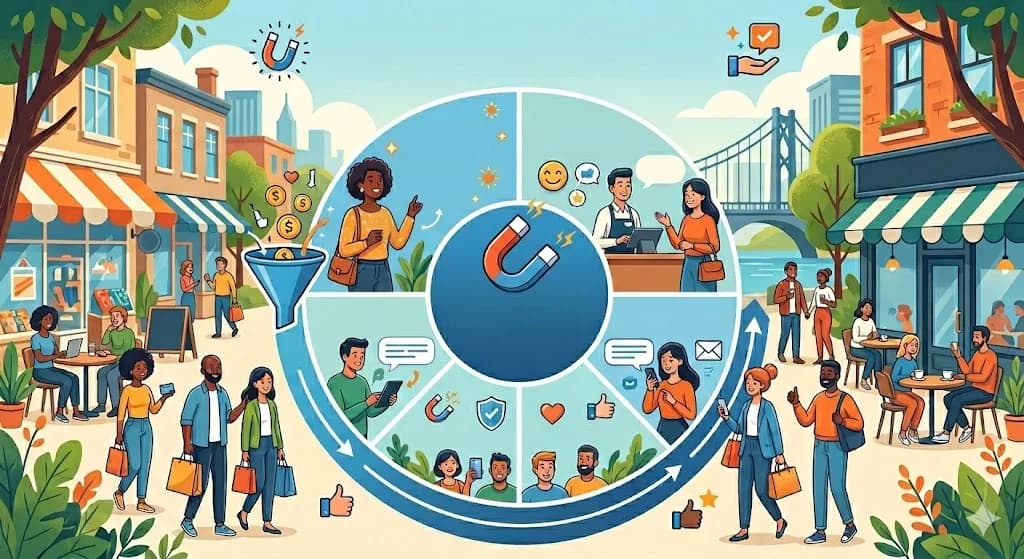
The customer lifecycle describes how relationships between businesses and customers evolve over time, from the first interaction to long-term loyalty and advocacy.
Understanding each stage allows businesses to deliver the right experience at the right moment while improving customer satisfaction and retention.
1. Awareness
This is the stage where customers first discover a business.
Awareness may come from:
- online searches,
- advertising,
- social media,
- customer reviews,
- blog articles,
- or word of mouth.
In competitive markets, attracting customer attention requires delivering the right message, at the right time, through the right channel.
2. Consideration
At this stage, customers begin evaluating available options and comparing competitors.
They assess:
- value,
- quality,
- pricing,
- reputation,
- and how well products or services meet their needs.
Reviews, testimonials, and customer experiences play a major role during this phase.
3. Purchase
This is the stage where prospects officially become customers.
However, even at this point, poor communication, delays, or account errors can negatively impact the experience and prevent successful transactions.
4. Retention
Once the first purchase is completed, the focus shifts toward building a long-term relationship.
Retention strategies may include:
- personalized support,
- loyalty programs,
- relevant promotions,
- educational content,
- and proactive communication.
Providing excellent customer service after the sale significantly increases the likelihood of repeat business.
5. Advocacy
Advocacy is the final stage of the customer lifecycle.
At this point, satisfied customers become brand ambassadors who naturally recommend the company to others.
Customer advocacy is built through:
- trust,
- consistent positive experiences,
- excellent support,
- and long-term relationship building.
Conclusion
Great B2C representatives do more than answer questions or complete transactions. They create experiences that build trust, loyalty, and long-term customer relationships.
Businesses that combine:
- empathy,
- active listening,
- fast support,
- personalization,
- and problem-solving
are far more likely to retain customers and stand out in competitive markets.
Ready to put this into practice?
Tell us about your customers and your goals. We will show you how a Beecall team can make every interaction count.